Showing posts with label Science-Fiction. Show all posts

Saturday, 13 January 2018

TV Review; KIRI + HARD SUN

This article was originally published in The Courier on 13th January 2018.


KIRI: Wednesday, Channel 4

HARD SUN: Saturday, BBC One


Miriam is an experienced social worker who one day makes an error of judgement that leads to tragedy.

She arranges an unsupervised visit between foster child Kiri and her birth grandfather. While Miriam is gone, Kiri is apparently abducted by her ex-con father. A few days later, her body is found. The finger of blame points towards Miriam.

This is KIRI, a compelling new drama starring the great Sarah Lancashire. It’s written by Jack Thorne, author of the Yewtree-inspired National Treasure. Kiri is inspired by another explosive issue torn from the headlines, namely the unjust vilification of social workers.

Miriam becomes a convenient scapegoat. The media hounds her. The public turns against her. She’s thrown under the bus by her employers. She drowns herself in booze.

The murdered girl is black. Her adoptive parents are middle-class and white. This complicates matters even further. Within days of Kiri’s disappearance, yer actual John Humphrys is on Radio 4 chairing a debate on the ramifications of children being matched with families from different cultural backgrounds. Right-wing tabloids accuse social services of “ticking their lefty boxes”. It all feels depressingly real.


Thorne is fascinated by the ways in which the media manipulates, exploits and simplifies complex emotional issues. It constructs binary narratives blithely untroubled by shades of grey. It gorges on grief and enflames prejudices it helped to create in the first place.

Though his writing becomes slightly didactic when his passion and sincerity gets the better of him, for the most part he devises plausible scenarios, searching arguments and convincing characters. Miriam, with all her quirks and flaws, is a gift for Lancashire, who’s always at her best when suffering in a pool of anguish and gallows humour.

Thorne succeeds in his goal of humanising social workers. They are, after all, human. They sometimes make mistakes, but they also do a lot of good. You never read about that in the press, of course. Kiri shows what happens when social workers, who devote their professional lives to helping people, end up needing help themselves.

A nuanced polemic and compassionate character study, Kiri is a valuable piece of work.

“Nuance” isn’t in Neil Cross’ vocabulary. The Luther creator deals in heightened pulp fiction powered by graphic violence and a grim world view. He probably wrote Victorian Penny Dreadfuls in a previous life.

His obsessions reached some kind of crazed apogee in HARD SUN, a propulsive sci-fi conspiracy thriller which, like Luther, treads a fine line between entertaining largesse and outright nonsense.  
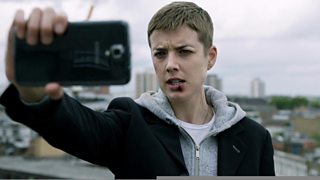

Blokey Jim Sturgess and the quietly charismatic Agyness Deyn are mismatched London coppers who discover that the Earth will be destroyed by an unspecified solar catastrophe in five years (yes, the Bowie song does appear). The governments of the world want to keep this rotten news under wraps, lest the human race goes bananas.

What’s more, Sturgess appears to be a dodgy copper up to his neck in all sorts of chicanery, while Deyn’s mentally ill son tried to kill her via stabbings and arson. She’s also secretly investigating Sturgess. What a carve up.

In typical Cross fashion, Hard Sun revels in audacious set-pieces and gore. In order to enjoy it you have to set your brain into the appropriate gear. Suspension of disbelief is key.

It is, by its very precarious nature, a show that could go either way, but episode one set things off in agreeably crackerjack style. I’m a sucker for paranoid dramas wreathed in apocalyptic futility, and Hard Sun doesn’t disappoint on that front.

Sunday, 6 November 2016

TV Review: DARK ANGEL & HUMANS

This article was originally published in The Dundee Courier on 5 November 2016.


Dark Angel: Monday, STV

Humans: Sunday, Channel 4

ITV has dramatised so many real-life crime and murder cases over the years, it’s all but exhausted the 20th century as a gruesome source of inspiration.

Hence, one presumes, the arrival of two-part death carnival Dark Angel, starring Joanne Froggatt (dutiful housemaid Anna from Downton Abbey) as 19th century serial murderer Mary Ann Cotton. This is truly horrible history.

From 1865 to 1872, Cotton cut a poisonous swathe through the North East of England, murdering several husbands – and possibly eleven of her 13 children – for their life insurance policies.

In the hands of writer Gwyneth Hughes, she was initially portrayed as a sympathetic figure mired in poverty and struggling to raise a family while her first husband scraped a paltry living at sea.

But our sympathies soon waned when she discovered the swift and painful properties of arsenic.


A fine, intelligent actress, Froggatt pitched her performance astutely. The – to say the least – morally wayward nature of her character was rendered more chilling by her decision to adopt the gentle North East tones of Sarah Millican.

Froggat’s Cotton wasn’t depicted as a leering maniac, but rather as a coldly pragmatic, manipulative killer who wasn’t beyond feeling guilt for her actions. However, those occasional pangs of conscience couldn’t dissuade her from a cruel and perverse mission to climb the social ladder.

No one suspected foul play when her family members coincidentally died in vomit and faeces-stained agony, because Victorian society couldn’t even begin to entertain the notion that a woman would be capable of such crimes.

By the end of episode one, she’d dispatched two hapless husbands, two children and her own mother. No wonder the blue-grey colour palette looked so depressed.

It may not be the most compelling study of a psychopath you’ll ever see, but Dark Angel is a suitably bleak and low-key account of an overlooked chapter in British criminal history. Seldom have the words “Let’s make you a nice cup of tea” been delivered with such an impending sense of doom.

A deserved hit for Channel 4, series one of Humans was one of the most thoughtful and intelligently-realised sci-fi dramas of recent years.

Based in a near-future Britain where lifelike androids – or synths – are employed as unquestioning slaves within the service industries, it managed to combine all the usual philosophical quandaries of A.I. fiction with an overarching conspiracy narrative and an effective domestic setting.

But where to go from there? In attempting to broaden the scope of this world, the first episode of series two was a globe-trotting muddle in which far too many strands competed for our attention.


The relatively small-scale drama of series one has been replaced by an overly busy stew of disjointed ideas. It’ll hopefully settle down and regain focus soon, but this was a textbook example of how not to begin a new series.

Or perhaps it’s because I’m beginning to suspect that I don’t particularly care about the fate of our rag-tag group of sentient synths and their voyage of self-discovery, and preferred Humans when it was the story of a dysfunctional family struggling to cope with the introduction of a synth into their lives. The scenes involving the Hawkins’ were more engaging than anything else in episode one.

I’ll gladly eat those words if Humans 2 matches the quality of its predecessor. Maybe, in its eagerness to grab our attention, it just got off to an awkward, malfunctioning start. 

Sunday, 13 March 2016

TV Review: DOCTOR THORNE + THE ALIENS + STOP/START

This article was originally published in The Dundee Courier on 12th March 2016.


Doctor Thorne: Sunday, STV

The Aliens: Tuesday, E4

Stop/Start: Friday, BBC One

Paul Whitelaw

Paupers! Mourn ye not for the demise of Downton Abbey, for oleaginous Tory apologist Lord Julian Fellowes hath returned with another luxury bauble of frock-coated period drama! Let joy be unconfined.

An adaptation of a 19th century novel by Anthony Trollope, Doctor Thorne stars Tom Hollander, looking for all the world like a limited edition Victorian Lego man, as a kindly physician struggling to protect his sweet, penniless niece from a whirling community of money-obsessed snobs.

Fellowes, an awful snob himself, does at least ridicule their grasping aspirations; if he wasn't working from another writer's text, he'd almost certainly ask us to sympathise with them in some way. 

With its ludicrously heightened summer colour palette and near-impenetrable conversations involving the surnames of characters we hadn't met yet – Fellowes dumps exposition with all the finesse of a blunderbuss - the first half of episode one felt like a silly French & Saunders spoof of This Sort Of Thing.

But when the simple narrative eventually became clear – unbeknownst to anyone but Thorne, his niece is the heir to a fortune owned by Ian McShane's entertainingly crude Lord of the manor - it revealed itself to be a fairly diverting social satire elevated by a fine cast.

The Americans will love it, which is the main thing as far as ITV are concerned.  

An aggressively unfunny black comedy with ham-fisted allegorical pretensions, The Aliens
depicts a 21st century Britain identical to our own, except for the presence of humanoid beings from another planet who are forced to live in a fortified urban ghetto.

This vilified underclass are pejoratively known as “Morks” (geddit?) and, having presumably replaced travellers, immigrants and benefit claimants as society's knee-jerk victims of choice, fulfil the nasty human urge to blame someone else for our problems.

It's a premise more or less stolen from the superior South African sci-fi film District 9, but whereas that had something valuable to say about racism, The Aliens strikes a weirdly reactionary tone for a show that presumably hopes to promote an anti-prejudice message.

Its stained with sniggering homophobia and a general meanness of spirit which not even the likeable hang-dog presence of This Is England and Being Human star Michael Socha can alleviate.

He plays a border patrol guard whose bigotry will obviously be challenged following his discovery that – in a twist visible from space – he's half-alien. This pivotal plot point is typical of how poorly conceived the show is: he's somehow survived into his twenties without realising he's half-alien, despite the fact that he's the only member of his team who's physically incapacitated by the technology they use to keep aliens in their place.

Socha deserves better than this. So do we.   

Written by and starring Jack Docherty of Absolutely fame, Stop/Start is the latest promising pilot from  the Comedy Playhouse strand. It's a Glasgow-based post-modern sitcom in which three couples in varying states of dysfunction share their inner monologues via direct-to-camera asides.

Sharp, funny and refreshingly unsentimental – some of its brutally frank observations elicited gasps from the studio audience – it's that rare beast: a middle-class, middle-aged relationship comedy with obvious popular and critical appeal.

Its central device could potentially annoy, but Docherty and a great cast including John Thomson, Kerry Godliman and Nigel Havers sell it expertly. More please!

Sunday, 21 June 2015

TV Review: HUMANS and PRIZED APART

Humans: Sunday, Channel 4

Prized Apart: Saturday, BBC One

Paul Whitelaw

Set in a parallel present where lifelike synthetic humans are as commonplace as iPads, sci-fi drama Humans takes the bold – some might say foolhardy - step of exploring territory that many great writers have traversed before.

Yet while the questions it poses are familiar – is artificial intelligence capable of feeling? Do we have the right to create it? Are we in danger of being usurped by the technology we're increasingly reliant upon? - it handles them with care and, in terms of world-building, precise attention to detail. 

And while it's too early to say if Humans will add up to much, at least its influences are openly acknowledged in a rather playful way.

It began with a harassed husband and father purchasing an android servant – known colloquially as synths – to help around the home. His wife, Laura, is a busy lawyer beset with mid-life malaise (none of the humans in Humans are happy). She's grown distant from her family, a problem compounded – despite her husband's contrary intentions – by the arrival of Anita, a strikingly beautiful synth whose eerily perfect countenance sets Laura on edge.

A sly wrinkle on the notion of a spouse feeling threatened by a partner's interest in a younger model – a theme echoed by the sub-plot involving a detective and the hunky synth who cares for his sick wife - this dysfunctional domestic setting is a master-stroke. It grounds an essentially fantastical premise in plausible reality. Though we automatically feel sympathy for Anita – after all, she's only following pre-programmed orders – we regard her with suspicion when viewed through Laura's eyes.

Sure enough, Laura has reason to be paranoid. It gradually transpires that Anita belongs to a rogue group of synths who have somehow developed independent thoughts and feelings. She's merely pretending to be subservient. But why?

Meanwhile, her fellow sentient synths are on the run from scientists fearful of their advanced state. This conspiracy thriller element coexists smoothly with the claustrophobic unease of the suburbanite scenes and an intriguing strand involving a widowed scientist (William Hurt) and his malfunctioning synth/surrogate son.

A droll sense of humour also ensures that Humans never feels pompous, even when confronting its hefty moral quandaries head-on. With its chilly aesthetic and dry spurts of satire, it occasionally resembles one of the better Black Mirror episodes. I particularly like the way our world, with no cosmetic alterations at all, is depicted as a bland, cold, chrome and glass wasteland.

But Humans wouldn't work if it was wholly cynical. It succeeds in asking us to sympathise with Laura and invest in Hurt's Geppetto/Pinocchio plight. Plus the horrifying pathos of robots cursed with living souls haunts the show throughout; the scenes depicting a sentient synth sold into prostitution make their point with unsparing yet compassionate intensity.

Regardless of noble intentions, the whole enterprise would capsize completely were it not for an utterly convincing performance from Gemma Chan as Anita. Mercifully free of the body-popping tics which often blight actors playing robots, her subtly precise, blandly benign demeanour is unsettling and – given what we know of her true nature – ineffably sad.

By sheer coincidence, Prized Apart marks the first instance of a quiz show devised and fronted by robots. A conceptually flawed bore, it sends members of the public on a Moroccan quest to win £100,000 via harness-enhanced stunts. Meanwhile, their loved ones back home in the studio provide half-hearted commentary in a sterile hangar commandeered by chief Auton Emma Watson.

None of it makes sense. The location segments don't gel with the stilted studio diversions – they're clearly not happening simultaneously - and there's never any sense of genuine peril, triumph or momentum. Imagine I'm A Celebrity... without the celebrities. Or Bake Off without the baking. Or life without meaning. That still doesn't come close to the echoing pointlessness of Prized Apart.


Tuesday, 4 November 2014

TV Review: THE MISSING and INTRUDERS

A version of this article was originally published in The Courier on 1st November 2014.


The Missing: Tuesday, BBC One

Intruders: Monday, BBC Two

Paul Whitelaw

There is something uniquely visceral about stories involving vanished loved ones. The thought of losing someone through unexplained circumstances is a terror we can all relate to. So much so, it doesn't bear thinking about.

Thank heavens, then, for fictional drama! Like an unflattering mirror, it reflects those fears from a safe, if queasy, distance. Two new shows explored this area last week, albeit in markedly different styles.

Promising eight-part thriller The Missing stars the excellent James Nesbitt on suitably fraught and haunted form as the father of an abducted child. Five year-old Oliver was snatched during a happy family holiday to France in 2006. While standing in a crowded pub showing World Cup coverage, Tony (Nesbitt) suddenly noticed that Oliver was missing. There one moment, gone the next.

This impressively handled sequence tracked Tony's rising panic as he frantically searched their holiday resort. Every parent's nightmare writ large.

From there we switched between 2006 and the present day, where Tony, burdened with guilt, has become a heavy-drinking loner obsessively trawling the town where Oliver was last seen. His refusal to let go had torn his marriage apart, forcing his ex into the arms of the (rather creepy) British police liaison officer responsible for Oliver's case.

This plot point struck a rather jarring note, as did the highly convenient twist of tracing Oliver's movements through a second-hand shop with meticulously thorough records of sale. What's more – and call me a heartless monster if you will – the cliff-hanger discovery of Oliver's drawing of jug-eared daddy on a basement wall was, I'm afraid, borderline comical.

There's nothing funny about the subject matter, of course, but the execution was slightly overcooked at times. With such a sensitive issue at its core, sibling writers Harry and Jack Williams – who up until now have a background in mediocre comedy - need to tread very carefully.

Fortunately, The Missing is carefully handled for the most part. Niggling missteps aside, it's an engrossing mystery with a powerful emotional kick. While it remains to be seen if they can sustain this story over eight hours, for now it contains enough dark hints and unanswered questions to maintain a hefty sense of intrigue.

Incidentally, aside from its self-evident basis in the Madeleine McCann case, The Missing may be partly inspired by a little-seen yet painfully affecting independent film from 2004 called Keane, featuring a tour de force performance from Damian Lewis. For connoisseurs of bleak art, it comes highly recommended.

Tentatively, I'll make a similar claim for Intruders. Not for the faint-hearted, it's a grisly conspiracy thriller rooted in horror and sci-fi in which John Simm – passable US accent and all – plays a former cop on the hunt for his missing wife.

That's the simplified synopsis. What Intruders is really about is anyone's guess at this stage, although the concept of reincarnation is obviously key to its mystery.

Written by X Files alumnus Glen Morgan and directed by Eduardo 'The Blair Witch Project' Sanchez, its chilly, disquieting atmosphere is occasionally punctured by blunt bursts of violence. I knew I was watching an unconventional drama when at one point it looked as though we were about to see a child being murdered in cold blood. NB: we weren't.

A hint of dark humour undermines Intruders' more portentous leanings, and the central conceit of a shadowy underground organisation visiting homes and murdering the inhabitants is fundamentally chilling. Let's just hope it doesn't descend into abject bloody nonsense, as these things often tend to.