Showing posts with label Autism. Show all posts

Saturday, 11 March 2023

PAULA | BEND IT LIKE BOLLYWOOD | WE NEED TO TALK ABOUT COSBY

This article was originally published in The Courier on 11th March 2023.

NEXT WEEK’S TV

Paula ‐ Monday and Tuesday, Channel 4, 9pm

The popular broadcaster Paula Yates passed away in 2000 at the tragically young age of 41. This sensitive profile pivots around a previously unreleased interview recorded during one of the lowest points in her life. 

It allows Yates to partially narrate her own story, which is of course entirely at odds with the prurient tabloid-spun narrative. We’re reminded that Yates was very funny, smart and likeable, an engaging personality. 

She was also an attractive woman who had relationships with famous male pop stars, hence why she was cruelly hounded and mischaracterised by our ghoulish sexist media as some sort of glorified groupie. They hastened her demise. 

Curated with self-evident care and research, this tribute respects her memory.

Between the Covers ‐ Monday, BBC Three, 7pm

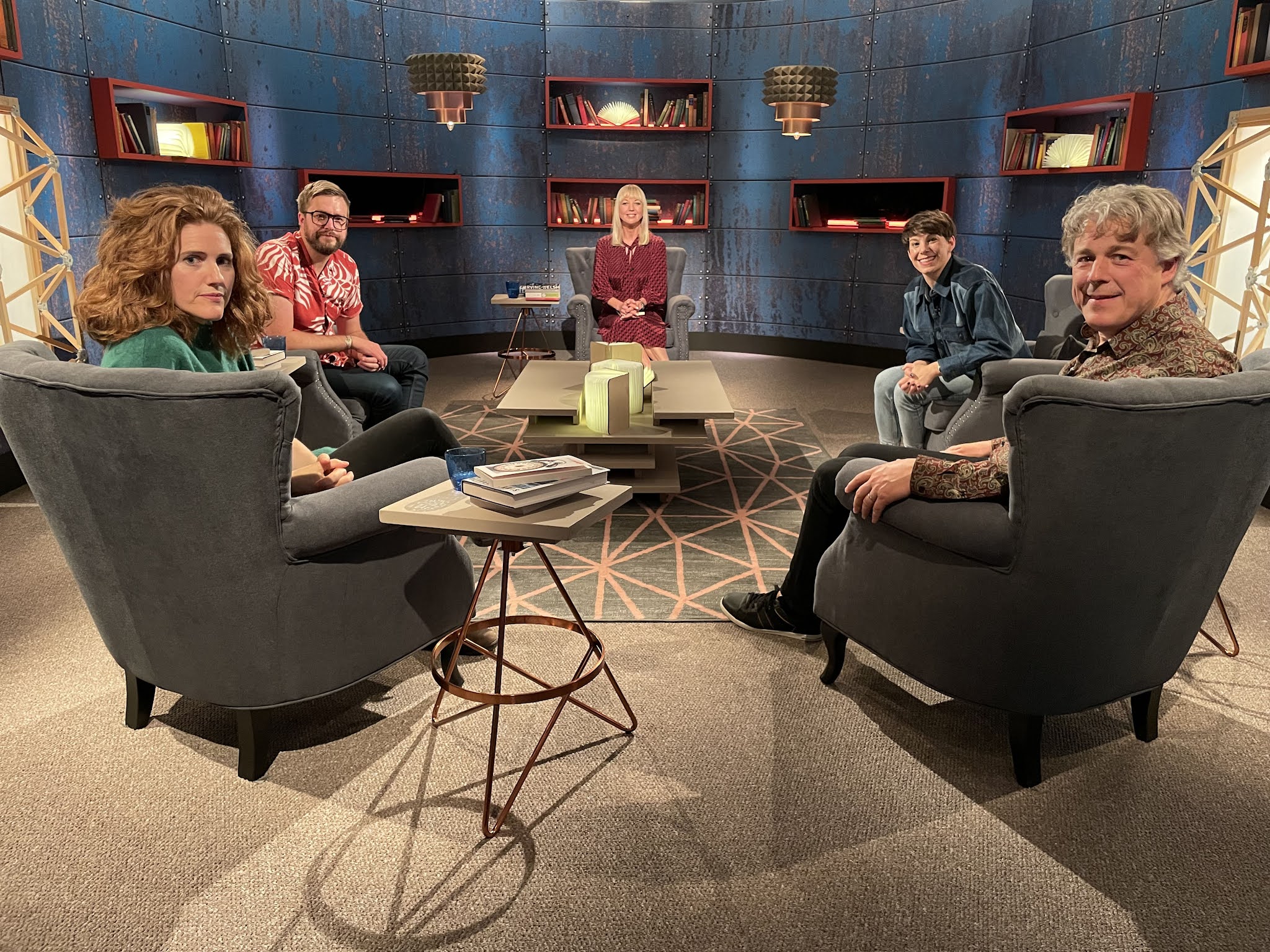
The latest series of Sara Cox’s cheery little book club welcomes to the fold DJ Spoony, broadcaster Angela Scanlon, the musician and radio presenter Cerys Matthews, and TV barrister Rob Rinder. 

As always, Cox’s guests wax lyrical about some of their favourite tomes while reviewing designated assignments. This week, they pore over In The Blink Of An Eye by Jo Callaghan and Burial Rites by Hannah Kent. 

Between the Covers is a pleasingly straightforward show in which some people chat informally about things they’ve read. There’s – and I’m aware of the pun – literally nothing more to it than that.

Christine McGuinness: Unmasking My Autism ‐ Wednesday, BBC One, 9pm

Christine McGuinness was diagnosed with Autism in 2021. That’s when her life began to make sense. In this ruminative documentary, she meets up with several women whose behaviour patterns have either been ignored or misunderstood. 

It raises important questions about gender bias and attitudes towards people on the Autism spectrum. 

Cynics will continue to carp about McGuinness positioning herself as a public figure. Her claim to fame is being married to the comedian Paddy McGuinness. I don’t care about that. Her opportunistic Peter Kay sidekick husband is lucky to have a showbiz career in the first place, so at least she’s exploited that association to make some television programmes of actual social value. Good luck to her.

Bend It Like Bollywood ‐ Wednesday, BBC Three, 9pm

The star of this uplifting documentary is Vinay, a gender non-conforming artisan who runs popular ‘Bollyqueer’ dance classes. Life hasn’t always been easy for the openly gay Vinay, as you can imagine. 

He (a pronoun Vinay is happy with) fled Leicester for London as a teenager, hoping to be embraced by the warm bright lights of cosmopolitan society. A profoundly formative experience. And now he’s back in Leicester, teaching people of all ages how to express themselves freely through the medium of dance. 

But Vinay also has to bridge a difficult gap of understanding between himself and his father. Spoiler alert: you’ll emerge from this programme with a smile and some hope.

Bali 2002 ‐ Thursday, ITVX

Eleven years ago, two of Bali’s most popular nightclubs were besieged by terrorists. This granular four-part drama pays tribute to the people caught up in those attacks. 

Balinese locals and international tourists, while desperately scrambling to escape from the chaos, did everything in their power to rescue the injured and comfort those whose lives hung in the balance. 

We also follow the Indonesian and Australian authorities as they investigate the case. Who was responsible for this atrocity? And why? 

Developed in close consultation with various survivors, Bali 2002 doesn’t cheaply romanticise instinctive acts of bravery and kindness. Most human beings are fundamentally decent, in times of dire need they’ll do whatever they can to help each other.

Nazanin ‐ Thursday, Channel 4, 9pm

Nazanin Zaghari-Ratcliffe is a British-Iranian charity worker. In 2016, while about to return home to London after visiting her parents, Nazanin was arrested at Tehran airport. She was charged with spying, separated from her two-year-old daughter and sentenced to five years in Tehran’s notorious Evin prison. 

Several years in the making, this moving documentary gains access to Nazanin while following husband Richard’s tireless campaign for her release. 

Nazanin is a political prisoner whose fate is bound up within complex historical events that have nothing to do with her. “I’ve never done any propaganda against the Iranian regime,” she says while languishing in solitary confinement, “I am not a political person. I need to go home.”

Comic Relief 2023 ‐ Friday, BBC One, 7pm

This year’s charitable harlequinade is hosted by David Tennant, Zoe Ball, Joel Dommett, AJ Odudu and Paddy McGuinness. 

Dunno about you, but I’m old enough to remember when Comic Relief was hosted by actual comedians. Wasn’t that originally the point? Yes, I know, obviously the most important point is raising lots of money for worthy causes, but Comic Relief once did that, many moons ago, while rolling out a marathon of comedy. 

David Tennant is a very nice man, but he’s no Rowan Atkinson. I’m sure he’d be the first to admit that. 

Anyway. There will be sketches, musical numbers and all manner of whatnot. Moments of amusement may arise. Donate some money if you can.

LAST WEEK’S TV

Dionne Warwick: Don’t Make Me Over ‐ Saturday 4th March, BBC Two

The great Dionne Warwick was the perfect conduit for the exquisite songs of Burt Bacharach and Hal David. She’s a soulful singer who intuitively understood how to interpret their sophisticated compositions. 

This terrific feature‐length documentary allowed Warwick, an abundantly decent person, to tell her extraordinary story in the company of admirers such as Alicia Keys, Smokey Robinson, Stevie Wonder and, in one of his final interviews, Bacharach himself. 

The chapter on her pioneering AIDS activism was particularly fascinating, and I was tickled by the retelling of her 1990s encounter with Snoop Dogg, who was genuinely contrite when she challenged him about the misogyny in his lyrics. When Miss Warwick talks, you listen.

We Need to Talk About Cosby ‐ Sunday 5th March, BBC Two

The serial rapist Bill Cosby was once fondly regarded as America’s Dad. Throughout his hugely successful career, he projected an affable, wholesome family man image. His reputation as a pioneering comedian and African American crossover artist is now irretrievably tarnished. 

In this outstanding series, writer/director W. Kamau Bell unpicks Cosby’s complex legacy. He speaks to several associates, social commentators and, most significantly, survivors. 

Bell ‐ who describes himself as ‘a child of Cosby’ ‐ began by explaining why his former hero was so beloved and revered. Only by placing his cultural impact in context can we understand how he exploited that trustworthy public persona to abuse women over several decades. 

This is an important piece of work.

Sunday, 19 February 2023

A SPECIAL SCHOOL | THE WOMEN WHO CHANGED MODERN SCOTLAND | THE GOLD

This article was originally published in The Courier on 18th February 2023.

NEXT WEEK’S TV

A Special School – Monday, BBC Two, 7pm

Penarth’s Ysgol y Deri is Britain’s biggest special education school. It remained open during the pandemic to provide support for the children of key workers. 

In series two of this uplifting documentary, staff and pupils are preparing for their annual Christmas pantomime. They’re also about to enjoy the first school trip since 2019. 

This isn’t merely a job for the staff, they’re devoted to the welfare and development of the children placed in their care. The headmaster, an abundantly kind and decent man, is even moved to tears at one point. 

One of his colleagues sums up their commendable mission statement: “School is very structured, a safe place, but we want them to take those skills into the real world.”

Inside Our Autistic Minds – Tuesday, BBC Two, 9pm

In the second and final episode of this sensitive series, Chris Packham meets more people who are, like him, on the autism spectrum. 

His interviewees this week are an aspiring teenage rapper, and a teaching assistant who moonlights as a trance DJ. They both love music, but that passion triggers a certain set of problems. 

Packham assists them in the making of personal short films designed to educate their classmates, colleagues and us. This is how they see and hear the world. It’s a touching, candid exercise. 

Packham also spends some time with an expert in autistic hypersensitivity, and a doctor who helps our host to understand his own need for precise daily order.

The Dangerous Rise of Andrew Tate – Tuesday, BBC Three, 10pm

Andrew Tate is a vile misogynist influencer who commands a legion of radicalised male followers. A fascistic cult. 

Two months ago, in his adopted home of Romania, he was arrested on suspicion of human trafficking. This disturbing documentary follows journalist Matt Shea as he gains highly restricted access to Tate’s Romanian compound. 

Tate has zero self-awareness, so he presumably regarded this venture as yet another piece of cleverly controlled self-promotion. Shea, in his quietly Theroux-esque way, encourages Tate to dig an even deeper hole for himself. 

Most importantly of all, we hear from some of the traumatised women who allege abuse by this toxic grifter. Tate’s empire may be crumbling, but what he represents is still frighteningly prevalent.

The Women Who Changed Modern Scotland – Tuesday, BBC Scotland, 10pm

This fascinating series celebrates many of the great Scottish women who, over the last 50 years, have challenged the patriarchy. 

It’s a valuable social document in which our empathetic host Kirsty Wark traces an ongoing battle for equal rights. 

Her odyssey begins in the 1960s, when female footballers weren’t allowed to compete officially. 

From there we progress towards the pioneering efforts of some heroic feminist politicians, a group of slyly empowering journalists who worked on teen mag Jackie during its 1970s heyday, and the origins of Scottish Women’s Aid, a vitally important charitable organisation devoted to the prevention of domestic abuse. 

Societal attitudes have improved, at least to an extent. Wark and co explain why that shift had to happen.

Untold: Help! My Home is Disgusting – Tuesday, Channel 4, 11:05pm

When Kwajo Tweneboa shared the nightmarish details of his social housing situation online – imagine a miasma of cockroaches, mice, mould and overflowing toilets – he was inundated with responses from people struggling in similarly unacceptable environments. So much so, he is now a high-profile social housing campaigner. 

In this documentary, Tweneboa visits people living in various states of utter despair. Whenever they confront their landlords, they are ignored. Pay your rent, or get out. 

Tweneboa’s report highlights the direct correlation between dismal living conditions and the exacerbation of severe mental health issues. He also exposes the sheer number of complaints aimed against some of the biggest housing associations.

The Supervet: Safari Special – Thursday, Channel 4, 9pm


Professor Neil Fitzpatrick, the Supervet himself, is one of television’s most benign and genuinely helpful resident experts. Should your domestic animal friends ever find themselves in times of trouble, Fitzpatrick is the softly-spoken physician you’d want by their side. 

In this Very Special Episode of his long-running vehicle, he ventures off to South Africa.

Fitzpatrick is renowned for his neurosurgical and orthopaedic innovations, he’s improved the lives of countless small animals, but he’s never dealt with anything on this particular scale before. 

While working and learning alongside a dedicated South African team who deal with big cats etc. on a daily basis, he emphasises the importance of protecting these magnificent creatures.

Life and War: Ukraine A Year On – Thursday, STV, 9pm

ITV's Global Security Editor Rohit Kachroo has witnessed the invasion of Ukraine first–hand. In this report, he interviews civilians, medics and soldiers, all of them fighting desperately for survival. 

When Russia invaded Ukraine, the country mobilised to defend itself. It was not, as Putin presumably expected, immediately overcome. Millions fled the country, but many more stayed to face their invaders. 

Preview copies of this programme weren’t available, so I’m obviously not qualified to comment upon its specific contents. But I don’t need to stress why I’m bringing it to your attention. 

ITV, self-evident faults and all, is rightfully renowned for its occasional sober detours into investigative journalism.

LAST WEEK’S TV

The Gold – Sunday 12th February, BBC One

A six-part dramatisation of the Brink’s-Mat robbery, that notorious 1983 heist in which a criminal gang stole a stack of gold bullion worth £26 billion, The Gold is presented neither as a celebration nor outright condemnation. 

Written by Neil Forsyth of Bob Servant and Guilty renown, it’s a nuanced piece about some desperate men struggling under the yoke of Thatcherism. Forsyth doesn’t ask us to sympathise with them unequivocally, but he places their actions in thoughtful socio-political context. 

It’s a fascinating saga, recounted with Forsyth’s usual wit and flair. Also, hats off to the production team for capturing the uniquely overcast aesthetic of early 1980s television dramas shot on film. 

Better – Monday 13th February, BBC One

Would a corrupt cop and an organised crime boss really conduct their clandestine affairs with such wantonly face-to-face abandon? That’s what I found myself dwelling upon after episode one of this watchable, if not entirely plausible, thriller. 

DCI Slack (Leila Farzad) and Col McHugh (Andrew Buchan) are indebted to each other. They’ve been in cahoots for years, but a series of unfortunate events places their relationship in jeopardy. 

Better demands that we suspend a considerable amount of disbelief, which isn’t a great starting point for any drama. It may, however, develop into a serviceable potboiler. 

Farzad and Buchan are solid, and the script is etched in pleasingly sardonic shades of the recently departed Happy Valley. 

Saturday, 27 November 2021

POSITIVE + PADDY & CHRISTINE McGUINNESS: OUR FAMILY AND AUTISM + DOCTOR WHO

This article was originally published in The Courier on 27th November 2021.

NEXT WEEK’S TV

Positive – Wednesday, Sky Showcase, 9pm

Fittingly, the first episode of this thoroughly researched three-part series goes out on World AIDS Day. It’s an insightful study of Britain’s response to HIV over the last 40 years, told via moving personal testimonies. 

The story begins in 1981, when virtually nothing was known about this new disease. It captures a growing sense of widespread fear and confusion, as Britain’s gay community come to terms with the sheer tragic scale of the situation. Meanwhile, a broiling climate of moral panic is stoked up by homophobic tabloid reports. 

Younger viewers will doubtless be shocked by the blatant ignorance and prejudice endemic within British society at that time. The warmth and dignity of the contributors provides a welcome counterbalance.

Winter Walks – Monday to Thursday, BBC Four, 7:30pm

A sleeper hit during last year’s locked-down winter, this meditative series returns for another gentle bout of celebrity rambling. 

It’s an intimate affair in which the presenters film their solo jaunts using a 360-degree camera. They occasionally bump into people along the way, but for the most part they’re alone while thinking out loud (that’s the idea anyway; they’ve obviously considered what they’re going to say beforehand). It’s an appealing celebration of the sights and sounds of rural England; tranquillity incarnate. 

This year’s walkers are farmer and author Amanda Owen, hip priest Kate Bottley, BBC radio presenter Nihal Arthanayake and the inescapable Alastair Campbell, about whom I’ll say nothing; let’s not spoil the mood.

The Hunt for Bible John – Monday, BBC Scotland, 9pm

The final part of this fascinating series traces the contours of a police investigation which, as we know, ultimately went nowhere. There is no neat ending to this awful saga, no closure or justice for the victims and their loved ones. Bible John vanished into the ether. 

The police had practically nothing to go on beyond a vague description of the killer’s appearance. They were stumbling blindly in the dark, so much so they even enlisted the services of a flamboyant Dutch ‘clairvoyant’. A widely publicised Photofit not only led to hundreds of false leads, it stirred an already febrile atmosphere of fear and paranoia. 

The programme also exposes some appalling attitudes towards women, attitudes we recognise today as victim-blaming.

Stath Lets Flats – Tuesday, Channel 4, 10pm

The current series of this endearingly daft farce ends with the Greek wedding of Stath’s dad; the family patriarch and business tycoon. 

If you haven’t seen Stath Lets Flats before, then please allow me to nudge you towards every episode – there are eighteen in total – on streaming service All 4. It’s a charming, silly thing which pivots around Stath (series creator Jamie Demetriou), a hapless man-child who struggles with the basic requirements of his job as an estate agent. 

Demetriou’s sibling Nastasia, who you may recognise from What We Do in the Shadows, plays Stath’s sister. They’re naturally funny comic actors. It’s up there with Derry Girls as the best British sitcom of the last few years.

Meet You at the Hippos – Tuesday, BBC Scotland, 10pm

In this one-off documentary, actor Mark Bonnar visits Scotland’s five post-war new towns: Cumbernauld, East Kilbride, Glenrothes, Irvine and Livingston. Why? Well, back in the 1970s his artist father Stan was involved in a commendable civic mission to add some colour to those utopian visions of the future. He created the stone hippos in Glenrothes, where I grew up. Thank you, Stan, they’re delightful. 

Father and son throw themselves into this idiosyncratic paean to the joys of public art. Despite the irreverent post-modern tone – it’s partly a pastiche of earnest art documentaries – the programme succeeds as a fundamentally heartfelt piece of socio-political history. Artists like Stan make the world a more interesting and magical place.

Between the Covers – Wednesday, BBC Two, 7:30pm

Our book club attendees this week are a quartet of comedians: Alan Davies, Sarah Kendall, Suzi Ruffell and Love Island narrator Iain Stirling. 

Apart from Davies, none of them are voracious readers. But that’s partly why this show works in its modest little way. There is something quite heartening about people enthusing over things they’d never normally bother with. And the whole point, of course, is to encourage viewers to investigate these books for themselves. 

Titles under review include Ascension, a spy thriller written by Oliver Harris, and Tan Twan Eng’s 2012 novel The Garden of Evening Mists, which is told from the perspective of a woman who was interred in a Japanese POW camp during WWII.

Paddy & Christine McGuinness: Our Family and Autism – Wednesday, BBC One, 9pm

The comedian and gameshow host Paddy McGuinness has three young children, all of whom have been diagnosed with autism. In this sensitive yet unsentimental programme, McGuinness and his wife Christine talk candidly about their situation. 

“Every family’s experience is different,” says McGuinness, “we can only speak for ours.” But in doing so, they will hopefully provide some succour to other parents with children on the autism spectrum. Their goal is to challenge preconceptions while gaining a greater understanding of neurodiversity. They also give voice to some kids with autism; no one talks over them or pontificates on their behalf. 

This, by some considerable margin, is the most valuable piece of television McGuinness has ever made.

LAST WEEK’S TV

Doctor Who – Sunday 21st November, BBC One

I wouldn’t blame anyone who abandoned this series after the incoherent slog of episode three, but last week’s claustrophobic Weeping Angels chapter was a significant improvement: Doctor Who in spooky folk horror mode. 

I’m assuming that Maxine Alderton, who co-wrote the episode with befuddling showrunner Chris Chibnall, was responsible for the haunted village-under-siege elements of the episode, i.e. the good bits. 

However, for all his obvious faults, I will grant Chibnall this: he does have a knack for conjuring up striking concepts and visuals. They never have any emotional heft, they’re just ‘cool ideas’, but on a purely superficial level the Doctor being transformed into a Weeping Angel was an effective cliffhanger. He’s a flashy journeyman.  


Saturday, 21 October 2017

TV Review: GEORGE MICHAEL: FREEDOM + CHRIS PACKHAM: ASPERGER'S AND ME

This article was originally published in The Dundee Courier on 21 October 2017.


GEORGE MICHAEL: FREEDOM: Monday, Channel 4

CHRIS PACKHAM: ASPERGER’S AND ME: Tuesday, BBC Two


The celebrity curse of 2016 struck one final tragic blow on Christmas Day, when George Michael died.

Only the day before he’d been putting the finishing touches to an autobiographical documentary. GEORGE MICHAEL: FREEDOM now stands as an elegy.

It focused on the period when, after dissolving Wham, he became one of the biggest pop idols on the planet.

George was very private, but always candid in interviews. This final testament was no exception. He discussed losing his first true love to HIV, his mother to cancer, his high-profile battles with the industry, and his persistent feelings of insecurity and loneliness.

Celebrities whining about the pressures of mega-fame can often stick in one’s craw, but George’s innate likeability tempered the blatant hubris of producing this tribute to his own talent and artistic integrity.

The film also felt like a tacit admission that his imperial phase as a solo artist ended in the mid-1990s, after his failed court case with Sony. I suspect, sadly, that George knew he was a spent creative force during the final 20 years of his life.

He always somehow managed to come across as a normal person, even while wearing shades indoors. His public cries for help – getting arrested in that LA toilet, most famously - made him look fallibly human. George always laughed them off, which made us like him even more.


His reputation within the industry was illustrated by contributions from an impressive roster of famous friends and fans such as Mary J Blige, Ricky Gervais (delivering his standard “ironic” homophobe crap), Elton John, Nile Rodgers, Stevie Wonder and, somewhat incongruously, Liam Gallagher, who outed himself as an endearingly sincere fan of the Listen Without Prejudice album.

This fitting tribute reminded me that George possessed a strong, pure, soulful voice – his powerful rendition of Somebody to Love at the Freddie Mercury tribute concert gains extra resonance with the knowledge that his terminally ill lover was in the audience that night.

It also highlighted his gift for writing introspective soul-pop nuggets with mass appeal, and that he was, pop star ego and all, a nice, honest guy. How many feted global superstars can you say that about?

The candour continued in CHRIS PACKHAM: ASPERGER’S AND ME, in which the wildlife presenter opened up about his condition for the first time in public.


Packham has been hiding his condition for most of his life. As a high-functioning autistic person, he’s managed to sustain a successful 30-year career. Nevertheless, he regards himself as disabled. He’s seriously considered killing himself on three occasions.

Packham experiences the world in an intensely hyper-real way. He exhausts himself with his obsessive grasshopper mind, although his encyclopaedic knowledge of the natural world is the source of his success.

He prefers the company of animals, hence why he lives with his dog in the middle of nowhere. His partner, who lives miles away, admitted that his inability to relate to people is very challenging. Nevertheless, they’ve been together for ten years. He’s also proud of his bond with his stepdaughter. Autism has myriad complexities.

While raking over his life story, he investigated some controversial and alarming new American therapies aimed at stripping away autistic traits. They involved electrodes and extreme behavioural modifications for children.

Packham was understandably angered by the notion of “curing” autism. After all, it defines the lives of everyone who has it. It’s who they are. They have a valuable role to play in society, so shouldn’t we adapt to their needs instead of forcing them to change?

This thoughtful programme concluded that it did. I agree.

Saturday, 11 July 2015

TV Review: A SONG FOR JENNY and THE AUTISTIC GARDENER

A Song For Jenny: Sunday, BBC One

The Autistic Gardener: Wednesday, Channel 4

Paul Whitelaw

Julie Nicholson, a Church of England vicar, lost her 24-year-old daughter Jenny in the 7/7 London bombings. Jenny was one of 52 people killed that day. Though it focused on the Nicholsons alone, one-off drama A Song For Jenny was a sincere tribute to each of those victims and the 52 families who will forever mourn their loss.

Scheduled to commemorate the 10th anniversary of this senseless attack, the film followed Julie (Emily Watson) through every harrowing stage of her ordeal.

As with most dramatisations of real-life tragedies, the early scenes were suffused with a weighty sense of impending horror. Julie received a concerned call from her other daughter as soon as news broke of an unexplained tube explosion in London. Initial confusion gave way to mounting panic as Jenny proved unreachable by phone. All the family could do was wait and watch as the reports grew graver. Then came the inevitable, devastating news.

Numbed by shock and grief, Julie's London odyssey unfurled as a literal manifestation of, in her own words, Jenny's stages of the cross. It was a painful, almost masochistic form of catharsis. The scene in which she delivered the last rites over Jenny's remains was unbearably sad. Yet she found no comfort in her faith; God couldn't fill such a vast, unyielding void. Though it wasn't mentioned on screen, Julie is no longer a priest.

Nevertheless, this was ultimately a story of cautious hope and renewed faith - not in a higher being, but in humanity. After Julie, dazed and alone, viewed her daughter's body in London, a taxi driver insisted on taking her back to Reading with no charge. This simple act of human kindness took on enormous significance as part of her gradual journey towards some kind of peace. Despite her anger and hatred towards the bombers, eventually she refused to let those emotions overwhelm her love for Jenny.

A sensitive, intelligent actress capable of exuding anguish while remaining outwardly still, Watson was ideally cast as Julie. Her dignified performance was supported by a thoughtful screenplay from playwright Frank McGuinness. A fine, valuable, compassionate film.

The aptly named Alan Gardner is an award-winning garden designer. With his affable demeanour, neon red hair, rock tattoos and nail varnish – he looks like a psychedelic Ken Dodd - he's an unusually colourful addition to TV's never-ending roster of green-fingered artisans. He's also autistic.

In The Autistic Gardener, he assembles a team of horticultural enthusiasts from various points on the autism spectrum as they set about transforming various neglected gardens into imaginatively sculpted wonderlands. Mercifully bereft of patronising sentimentality, it's a good-natured and responsible series in which people with autism unassumingly raise awareness of their condition while exercising their creative abilities.

They build their confidence and gain a sense of achievement, their 'employers' get a groovy new garden to play with, and we enjoy the whole undemanding process while chortling at Gardner's self-aware narration, in which he cheekily mocks the clichéd conventions of the TV makeover genre. Everyone's a winner, baby.

With supposedly well-meaning yet problematic shows such as The Undateables, Channel 4 is often guilty of treating people with disabilities as outsider novelties. The Autistic Gardener treats them as equals. So hats off to all concerned. When was the last time Alan Titchmarsh reaffirmed your faith in human nature?