Showing posts with label Jeff Pope. Show all posts

Saturday, 1 October 2022

THE WALK‐IN | THIS ENGLAND | BLANKETY BLANK

This article was originally published in The Courier on 1st October 2022.

NEXT WEEK’S TV

The Walk‐In ‐ Monday, STV, 9pm

This intensely powerful factual drama confronts the horrifying resurgence of fascism in western society. 

Labour MP Jo Cox was murdered by a racist in 2016. One of the journalists who investigated that appalling tragedy was a former Neo‐Nazi turned anti-fascist campaigner. A brave man, he’s played by the great Stephen Graham. 

The Walk‐In is written by Jeff Pope, a television heavyweight rightly renowned for his outstanding catalogue of assiduously researched dramas steeped in sensitive subject matter. 

This, I assure you, is a searing piece of work. Fuelled by compassion, it seeks to understand the deep‐seated causes of bigotry and radicalisation. TV dramas such as this can make a difference. They matter.

24 Hours in A&E ‐ Monday, Channel 4, 9pm

The 29th series of this hardy perennial returns to St George’s Hospital in south-west London, which is home to one of Britain’s busiest A&E departments. 

The first patient we encounter is Graham, who’s been involved in a high-speed motorcycle accident. Graham’s doctors fear that he may have suffered significant damage to his back and neck, so he’s sent off for an urgent CT scan. His worried wife, Kate, talks movingly of their relationship and the various unforeseen problems they’ve faced. 

And that’s the very essence of 24 Hours in A&E: unlike so many programme of its ilk, it never fails to remind us that these people are three-dimensional human beings with stories to tell.

Paxman: Putting Up with Parkinson’s ‐ Tuesday, STV, 9pm

Jeremy Paxman is a notoriously short‐tempered man. He doesn’t suffer anything gladly. Eighteen months ago he was diagnosed with Parkinson’s. And this is his response. 

He’s on typically frank form during a programme in which he converses with leading neurological researchers and some other people who have Parkinson’s, while challenging myths about his condition. 

He also attends an English National Ballet therapy dance class and learns how to play bowls. 

Paxman often comes across as a rather blunt and dislikeable person, but that’s his act I suppose. It’s all showbiz. In this context, however, speaking honestly as himself, his no-nonsense approach is tempered with some sensitive insight. 

It should, one hopes, provide a bit of comfort. 

This England ‐ Tuesday and Wednesday, Sky Atlantic, 9pm

An excoriating six‐part drama from that estimable writer/director Michael Winterbottom, This England traces the absolute chaos of Boris Johnson’s first year in office as Prime Minister. 

Preoccupied with getting Brexit done, whatever that actually means, Johnson’s government were utterly unprepared for COVID. That’s understandable, but This England gets its point across in no uncertain terms: for all his Churchillian bluster, Johnson was fatally ill‐equipped to take charge of a national crisis. 

Kenneth Branagh as Johnson pulls off a difficult feat: playing a man who deliberately presents himself as a caricature. He comes across as an irresponsible fool floundering with the consequences of a pyrrhic victory, while sinister Dominic Cummings pulls the strings.

Doc Martin ‐ Wednesday, STV, 9pm

As the final series of this comfort blanket continues, Louisa is understandably perturbed when her estranged father (that fine actor Kenneth Cranham) turns up out of the blue. 

Meanwhile, Doc Martin is still struggling with his blood phobia, so he seeks some counsel with Ruth (that other fine actor, Dame Eileen Atkins). 

The third storyline ‐ there are always three, that’s how these shows operate ‐ involves a squatter who refuses to be budged from a vintage caravan. 

I have no truck with kneejerk cynics who sneer at the likes of Doc Martin. There’s nothing wrong with basking in good‐natured entertainment. You mustn’t always avoid the middle of the road, as Bob Dylan probably once sang.

Taskmaster ‐ Thursday, Channel 4, 11:05pm

Self-effacing sidekick ‘Little’ Alex Horne ‐ the brains behind the entire Taskmaster enterprise, but don’t tell faux-domineering host Greg Davies that ‐ is in his element this week. 

He oversees several tasks involving admin, ducks and flour. As always, his pedantic efficiency while dealing with such nonsense provides much of the humour. I appreciate that I’ve just described the appeal of Taskmaster in the driest possible terms, but Horne would presumably see the funny side of that. 

The whole point of the show is that none of it matters, but it wouldn’t work at all were it not treated with at least some degree of dedicated seriousness. And from thence the comedy arises. You’re welcome.

Jon Richardson: Take My Mother‐in‐Law ‐ Thursday, Channel 4, 12:15am

You’ve got to hand it to the professionally grumpy comedian Jon Richardson, the man has an unerring knack for coming up with vehicles for himself. His pitch meetings presumably involve him reading from a list of things he pretends to find vaguely annoying. 

His latest one, as you’ve presumably surmised, involves his mother‐in‐law. She’s about to retire, so Richardson has to pretend he’s intent on finding her a home in Spain ‐ otherwise she might move in with him and his wife! 

Yes, the premise is knowingly contrived, it’s a post‐modern take on mother‐in‐law gags. But it’s really just an excuse for yet another harmless/pointless TV road trip.

LAST WEEK’S TV

Blankety Blank ‐ Saturday 24th September, BBC One

We all know that Blankety Blank is nothing without Wogan or Dawson, both of whom elevated a daft quiz to knowingly dry‐witted heights, but Bradley Walsh does a decent job of keeping the flame alive. 

He’s an affable character who fundamentally ‘gets it’. A silly format, so let’s poke some fun at it. 

No, he can’t match Wogan’s subtly whimsical approach, nor Dawson’s hilarious decision to treat the whole thing as if it’s something he’s doing under major duress, but Walsh is a likeable pro. He knows how to keep things moving with a quip or two. 

That’s a talent, and I can’t deny the simple pleasures of watching a seasoned comic carrying out their duties proficiently.

Martin Compston’s Scottish Fling ‐ Friday 30th September, BBC Two

The latest leg of Compston’s amiable tour of our great nation took him, and co‐host Phil McHugh, to the Highlands. 

It’s an area of Scotland I have a particular affinity with, as I spent much of my childhood in Invergordon. So it was rather lovely seeing the ‘gordon (as no one calls it) represented on your actual primetime BBC television. 

Last week’s episode involved go‐karting, delectable vegan cuisine and an inspirational strongman story suffused with a positive mental health message. 

If you fancy a bit of respite, something to unwind with, then I thoroughly recommend catching up with this show on iPlayer. It’s a gentle pleasure, a spirit‐lifter.

Saturday, 29 April 2017

TV Review: LITTLE BOY BLUE + THE BOSS

This article was originally published in The Dundee Courier on 29 April 2017.


LITTLE BOY BLUE: Monday, STV

THE BOSS: Monday to Friday, BBC One


On 22 August 2007, 11-year-old Rhys Jones was shot dead in Liverpool while walking home from football practice. A motive for his murder has never been fully established, but it’s thought he was caught in the crossfire between rival teenage gangs. Another senseless victim of gun crime. Another tragic headline.

While the rest of us shake our heads in sympathy and get on with our lives, the families of victims such as Rhys are given no such luxury. Their unimaginable grief and anger can never truly dissipate.

Enter acclaimed writer/producer Jeff Pope, whose four-part drama LITTLE BOY BLUE offers an unflinching glimpse into the living hell of a devastated family.

Made with the full co-operation of Rhys’ parents, Melanie and Steve, it follows them through the aftermath of their son’s murder. It also sheds light on the police investigation led by a sympathetic DS, and the actions of those responsible for Rhys’ death (including a teenager bullied into hiding the gun).

Though necessarily harrowing, Little Boy Blue isn’t overcooked or manipulative. That’s not Pope’s style. His factual dramas are renowned for their sensitivity and basis in extensive research.


Even when dealing with characters as notorious as Ronnie Biggs, Karen Matthews, Peter Sutcliffe, Myra Hindley, Fred West and Cilla Black, Pope always manages to tackle potentially offensive subject matter in a responsible way.

True to form, Little Boy Blue is refracted through an understated prism of journalistic rigour and compassion. Its power emerges from the realistic detail of such heart-wrenching scenes as Melanie and Steve visiting Rhys’ dead body in hospital, where Melanie was gently yet firmly threatened with arrest if she touched her son. He was still regarded as evidence of an unsolved crime.

Explicit mention is made of the police’s tarnished reputation, hence why the innate decency and determination of DS Dave Kelly is quietly heartening. He’s not an idealised hero, just a good man doing his best to ensure that an ordinary family finds justice. He’s just about enough to restore your faith in the police and human nature.

Stephen Graham and Sinead Keenan deliver note-perfect, realistic performances as DS Kelly and Melanie Jones, neither straining for emotional fireworks in their respective roles. They’re entirely convincing.


So what do we learn from dramas such as Little Boy Blue? Why do they exist? More than mere voyeurism, they dig beneath the headlines and force us to put ourselves in the shoes of everyday victims of violent crime. The Jones family could be any of us.

Without resorting to mawkish sentiment, Little Boy Blue reminds us that humanity endures in a world awash with horror.

But hey, at least we’ll always have the meaningless respite of generic daytime quiz shows.

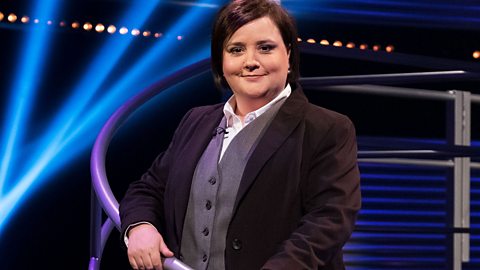
Hosted by the affable Susan Calman, THE BOSS won’t cause sleepless nights for the makers of afternoon trivia behemoths Pointless and The Chase. It’s too blandly derivative to threaten their unassailable cults.


I won’t bore you with explaining the rules, as I’d quite like you to read the rest of this review. Suffice to say, it’s a tension-free compendium of standard quiz rounds – number games, word puzzles, quick-fire trivia etc. – fatally undone by the easiness of the questions. Pointless and The Chase succeed because the questions are well-chosen and occasionally quite esoteric, especially when it comes to popular culture.

There’s just no fun in watching a quiz boasting brain-teasers which wouldn’t challenge even the most bog-standard, pie-eyed pub team.  

Friday, 26 September 2014

TV Review: CILLA and DOCTOR WHO

Cilla: Monday, STV

Doctor Who: Saturday, BBC One

Paul Whitelaw

The sound of minds being blown rippled across the land last Monday when ITV revealed that Cilla Black was friends with The Beatles. That Cilla has neglected to mention this fact at any point during her 50 year career is testament to her humility.

Joking aside – that's what that was – Cilla is a surprisingly engaging and energised dramatisation of the singer's early days. Written by Britain's very own biopic potentate Jeff Pope, whose previous credits include Fred West drama Appropriate Adult and the Oscar-nominated Philomena, it stars Sheridan Smith on knockout form as the young Priscilla White. Appropriately tough, cheeky, naive and endearing, she bravely contends with a false chipmunk overbite and oddly ill-fitting wig to deliver an affecting central performance.

And just in case you missed the blaring on-screen credit, she also does all her own singing. The real Cilla often gets a lot of stick for her singing voice – often from people who only know her as a TV presenter – but truthfully she had a powerful, if occasionally wayward, voice in her prime.

So why substitute her singing with Smith's? It's presumably because an actor miming to old recordings seldom looks convincing, so seeing as Smith can sing, the decision to use her vocals provides a satisfying realism. Another reason is that, in episode one at least, Cilla is depicted, not as a melodramatic balladeer, but as a raving rock 'n' soul belter, a period in her musical career which was never documented on tape. Smith could hardly have mimed to recordings which don't exist.

The production also benefits from an obviously large budget, with early 1960s working-class Liverpool impressively realised in all its dusty post-war glory. Cilla often recounts her hard scrabble origins with a kind of rose-tinted nostalgia, but Pope wisely tempers those sentiments with pointed references to sectarianism and an overall resistance to schmaltz.

Despite being endorsed by Cilla herself, it doesn't always depict her in a sympathetic light. Yes, she's the lovable girl next door, but she also betrays a career-minded ruthlessness and, in later episodes, a diva-esque sense of selfish entitlement. She may be ITV royalty, but this account of her life is thankfully no whitewash.

While it inevitably hits some of the usual biopic beats – there were a few awkward moments of “Hello, I'm George Harrison of The Beatles” exposition – Pope doesn't present it as a standard rags-to-riches saga. Instead he focuses on the touching romance between Cilla and budding impresario Bobby Willis. It's as much his story as hers, and Aneurin Barnard manfully overcomes his dyed-blonde resemblance to a live-action Thunderbirds puppet to deliver an exceptionally sympathetic performance. It helps that she and Smith share a charming chemistry.

Destined to be regarded as a classic, the latest episode of Doctor Who was a quite beautiful piece of television. Based around the idea of what the Doctor gets up to while alone in the TARDIS – answer: wraps himself in existential musings on the nature of fear - it combined genuinely creepy psychological horror with a strong emotional kick which, in a small yet significant way, added to Doctor Who's ongoing lore.

Witty and ambitious in the best Steven Moffat style, it was all the more impressive for being entirely ambiguous yet dramatically satisfying. The moment where the Doctor, Clara and young Danny/Rupert Pink encountered an erect entity lurking beneath the bedclothes - Freudian imagery on primetime Saturday night! - was arguably one of the most disturbing scenes in Doctor Who history.

Bolstered by canny, atmospheric direction from Douglas Mackinnon and an exemplary performance from Peter Capaldi, this thrillingly claustrophobic yarn was a reminder that Doctor Who is often more effective when delivered on an intimate scale.

Saturday, 22 March 2014

TV Review: THE WIDOWER and W1A

This article was originally published in The Courier on 22nd March 2014.

http://www.thecourier.co.uk/lifestyle

The Widower: Monday, STV

W1A: Wednesday, BBC Two

Paul Whitelaw

As anyone who's ever watched Take Me Out will attest, ITV is no stranger to the banality of evil. But nowhere is this theme better expressed than in the work of their undisputed king of true-life crime, Jeff Pope, whose list of credits include highly acclaimed dramas about the likes of Myra Hindley, Peter Sutcliffe and Fred West.

Whether as a writer or producer, the defining characteristic of Pope's work is its sensitivity. They may be torn from the headlines, but there is nothing sensational, exploitative or tabloid-esque about his dramas. Few of us would deny that we have a morbid fascination with killers and psychopaths, but Pope always manages to satisfy that impulse without being disrespectful to their victims.

And so it was with his latest effort, The Widower, in which Reece Shearsmith stars as convicted murderer Malcolm Webster. In 1993, this outwardly unremarkable man killed his first wife, Claire, for her life insurance. Having succeeded in passing it off as a tragic car accident – in reality he poisoned her – he then attempted to do the same to his second wife. He was eventually convicted for his crimes in 2011, 17 years after Claire's death.

How did he get away with it for so long? Pope and Shearsmith – a superb actor better known for his darkly comic roles in The League of Gentlemen and Inside No. 9 – did an effective job of illustrating Webster's plausible nature. Superficially charming and sympathetic, he duped his wives with ease. It's clear that these women weren't stupid or naïve. Rather, they were the helpless victims of an arch manipulator.

The scene in which Webster convincingly performed grief-stricken tears in the mirror, before switching them off in a flash, was particularly chilling. But it also contained a trace of black, queasy comedy, of the type that Shearsmith is known for. Both he and Pope realise that even the most appalling events can have an undercurrent of bleak humour. That such moments never came across as distasteful is testament to their careful handling of the material.

If Shearsmith's performance at times felt ever-so-slightly theatrical, I took that as a deliberate choice on the actor's part. Webster, after all, was a man who was constantly performing. A congenital liar and dangerous fantasist, his entire existence was founded on duplicity. Shearsmith's embodiment of this murderous Walter Mitty is never less than mesmerising.

A strange story skilfully told, The Widower exerts an uncomfortable pull.

A sequel to the affable sitcom Twenty Twelve, W1A deposits Ian Fletcher, the former Head of Olympic Deliverance, into the bowels of the BBC as their newly installed Head of Values.

Anyone expecting a savage media satire would've been disappointed. But that's not really writer/director John Morton's style. He's more interested in poking sly fun at corporate gibberish and incompetency. Fine, just as long as it's funny.

But therein lies the problem: the jokes are far too obvious. The concept of Britain's Tastiest Village may be an accurate parody of bland, populist BBC output, but it's a cheap and easy gag.

Plus Morton's signature writing style, that tortured stew of deliberately clumsy language, has finally worn out its welcome. It no longer surprises or amuses, and narrator David Tennant always sounds like he's winking knowingly at the audience.

It's frustrating, as the rest of the cast are impeccable. But they can't do much with such underwhelming material.