Showing posts with label Lesley Sharp. Show all posts

Saturday, 22 May 2021

LONG LOST FAMILY: BORN WITHOUT TRACE + INSIDE NO. 9 + WE ARE LADY PARTS

This article was originally published in The Courier on 22nd May 2021.

NEXT WEEK’S TV

Long Lost Family: Born Without Trace - Monday to Wednesday, STV, 9pm

This touching series, in which people abandoned as babies finally discover more about where they came from, is a reliably, and quietly, stellar piece of work. 

Programmes of this nature are often quite manipulative and questionable, but Long Lost Family comports itself with commendable sensitivity. It’s a force for good. 

Over the course of these three new episodes, we’re introduced to more people in search of answers. Closure, if you will. As always, the programme doesn’t judge their parents harshly; there are always difficult, mitigating circumstances. 

Time and time again, Long Lost Family unearths stories of young people in dire straits, people who for various reasons just didn’t know how to cope. Everyone involved is treated with compassion.

Cook Clever, Waste Less with Prue and Rupy – Monday, Channel 4, 8:30pm

According to this benign new lifestyle show, we apparently throw 14 billion (fiscal) pounds worth of food away every year. A dismal statistic. So thank heavens above for ‘leftover queen’ Prue Leith and food expert Dr Rupy Aujla, who are on a mission to help families save time and money while reducing food waste. 

This week, they meet two young boys with gluten and dairy allergies. Their parents try to provide them with a balanced diet, but that results in needless overspend and waste. 

So, Prue and Rupy devise a healthy, minimalist weekly meal plan; if you buy relatively cheap yet nutritious ingredients, they can be reused to create a variety of dishes. It really is that simple. 

The Year Britain Stopped – Monday, Channel 4, 9pm

Prior to the vaccine rollout, Britain had one of the worst Covid death rates in the world. This simmering documentary highlights the hypocrisy and incompetency of Boris Johnson’s government while speaking to NHS doctors and nurses, as well as some of the people who lost loved ones during the pandemic. 

We hear from one of the nurses who treated Johnson while he was hospitalised with Coronavirus. She’s very diplomatic and professional – Johnson was a patient who required treatment – but her sadness and disgust when he tried to co-opt her into his thumbs-up publicity campaign is palpable. 

It was just too upsetting, the very thought of clapping alongside him for the cameras when she’d witnessed so many deaths. 

Inside No. 9 – Monday, BBC Two, 9:30pm

The best episode of this series so far is set in a threadbare hotel room; a crucible of loneliness bathed in sickly green. Steve Pemberton plays a heartbroken little man who suspects that his wife is having an affair. So he hires a professional lip-reader (Sian Clifford) to spy on her movements in an adjacent building. 

Reece Shearsmith occasionally butts in as a stiff, uptight German hotel manager with a sinister pencil moustache. He’s permanently suspicious and interfering. It’s like a weirdly claustrophobic episode of Fawlty Towers. Pemberton and Shearsmith are, of course, aware of this; listen out for a fleetingly specific allusion to Basil’s attitude towards his guests. 

A satisfyingly bleak and cruel instalment of an endlessly surprising anthology. 

The Black American Fight for Freedom – Wednesday, BBC Two, 9pm

Last year, as you know, the brutal murder of George Floyd ignited the Black Lives Matter movement, which campaigns not only for an end to police brutality but also for something that was promised 48 years ago by the Civil Rights Act: racial equality. 

This despairing documentary looks back at those moments during the last six decades of American history when opportunities for positive social change were cruelly snatched away. The programme explains why these brief glimmers of hope have been repeatedly vanquished. 

In America today, you are five times more likely to serve time in prison than if you’re white. The average black family is eight times poorer than the average white family. For all our supposed enlightenment, systemic injustice still prevails.

Before We Die – Wednesday, Channel 4, 9pm

Lesley Sharp stars in this beat-for-beat British adaptation of a resolutely solemn Swedish crime drama, which you may have seen via Channel 4’s Walter Presents strand. 

She plays a police detective whose partner, a fellow officer, is abducted during a stakeout. To make matters worse, she discovers that her troubled stepson – with whom she has a strained relationship – has been assisting his dad in an undercover investigation into organised crime. So now they’re all involved. 

It’s a decent enough premise, but Before We Die is fatally undermined by sloppy pacing and wooden dialogue. Even an actor of Sharp’s calibre can’t rise above those fundamental flaws. All she can do is her professional best.

Friday Night Dinner: 10 Years and a Lovely Bit of Squirrel – Friday, Channel 4, 9pm
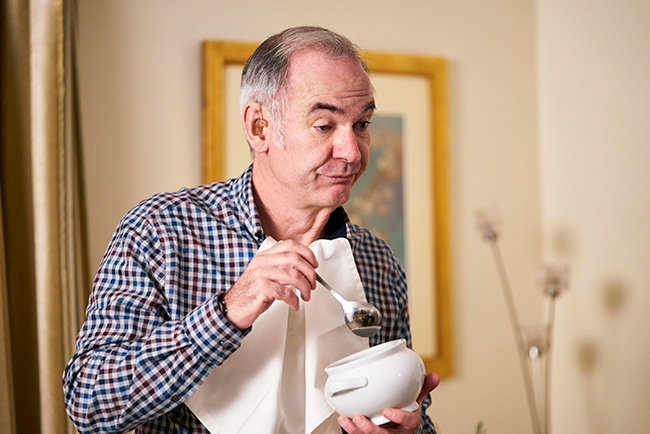
This tenth anniversary celebration of Robert Popper’s semi-autobiographical sitcom farce about a suburban Jewish family also serves as a bittersweet tribute to the great Paul Ritter, who passed away recently. 

Ritter was seriously ill when the programme was made, but he was determined to pay tribute to a series he was understandably proud of. This marks his final onscreen appearance. Ritter’s performance as the endearingly eccentric Martin was an absolute delight. He will be missed.

The programme also features interviews with Popper and the cast, as well as celebrity fans – and long-time Popper pals – David Baddiel and Peter Serafinowicz. It provides some insight into the writing and filming process, and there are a smattering of outtakes to enjoy. Shalom.

LAST WEEK’S TV

Delia Derbyshire: The Myths and the Legendary Tapes – Sunday 16th May, BBC Four

20 years ago, some tapes were found in a Northampton attic. They were the lost works of electronic music pioneer Delia Derbyshire, who had recently passed away. Musician/performance artist Cosey Fanni Tutti sampled them to create the soundtrack for this immersive and suitably idiosyncratic docudrama from British actor and filmmaker Caroline Catz. 

Derbyshire, a member of the BBC Radiophonic Workshop, is best known for her extraordinary arrangement of the Doctor Who theme; but that was just one of her many creative achievements. She was a beguiling nonconformist immersed in musique concrete and the infinite subtleties of sound. 

Catz played Derbyshire in tasteful dramatic reconstructions, while friends and collaborators waxed lyrical about this remarkable artist. Audio interviews with Derbyshire were laced throughout. A haunting film.

We Are Lady Parts – Thursday 20th May, Channel 4

An obvious cult hit in the making, this hugely likeable sitcom follows a Muslim female punk band – the titular Lady Parts – as they attempt to spread their uncompromising feminist message. 

The protagonist is a bright, conservative, geeky young Muslim woman whose ultimate priority is finding a husband. A big fan of earnest 1970s folkies such as Don McLean and Janis Ian, she provides acoustic guitar lessons for underprivileged children, and only accepts the gig as Lady Parts’ lead guitarist so she can meet the drummer’s handsome brother. Unfortunately, she suffers from vomit-inducing stage fright. 

Written and directed by Nida Manzoor, We Are Lady Parts is charming and subversive. It’s a sly, good-natured labour of love.


Monday, 22 May 2017

TV Review: THREE GIRLS + A TIME TO LIVE + KAT AND ALFIE: REDWATER


This article was originally published in The Courier on 20 May 2017.


THREE GIRLS: Tuesday to Thursday, BBC One

A TIME TO LIVE: Wednesday, BBC Two

KAT AND ALFIE: REDWATER: Thursday, BBC One
  

Unflinching, furious, despairing, THREE GIRLS told the horrifying true story of the Rochdale child sex abuse ring. 

Over several years, a group of men, most of them British Pakistanis, groomed and raped vulnerable working-class schoolgirls. The local police failed to thoroughly investigate their crimes, allegedly due to fears of appearing racist.

This outstanding drama, shown over three consecutive nights, was a damning indictment of a systematic failure to protect abused children.

Based on extensive research, interviews and public accounts, it focused on three of the victims – their names changed for obvious reasons – as well as the whistleblowing NHS sexual health worker (Maxine Peake) and the sympathetic senior police officer (Lesley Sharp) who treated them with the respect they deserved.

Their ordeal didn’t end with the abuse; the trauma continued when they struggled to defend themselves in court.

Their abusers exploited the fact that working-class kids with chaotic lives tend to be ignored and mistrusted by the authorities. As Peake’s character angrily observed, these girls were repeatedly “raped, beaten, not believed.”

She embodied the sense of righteous compassion which coursed through writer Nicole Taylor’s sensitive screenplay. Her sterling work was bolstered by a superb cast, including three extraordinary young actresses who never appeared to be acting at all. The raw power of Three Girls was largely drawn from their entirely natural performances.


Peake and Sharp were typically great – their belief in this material was palpable – but special mention must go to Paul Kaye as the father of one of the victims. His quietly devastating performance proved just how far he’s come since his Dennis Pennis days.

Inevitably, this scandal played into the hands of Britain’s thriving bigot community. Taylor tackled that unfortunate side-effect while reminding us that the crown prosecutor who brought the case to trial was a British Pakistani.

The BBC should be applauded for devoting three hours of primetime to such uncomfortable territory. 

It’s a drama to be spoken of in the same vital breath as Cathy Come Home.

How would you cope if you were given a terminal diagnosis? Would you rail against the cruel injustice of it all, or would you choose to make the most of the limited time you had left?

These difficult questions formed the basis of A TIME TO LIVE, the latest film from one of TV’s finest documentarians, Sue Bourne.


 If you’re familiar with Bourne’s work - and you should be – then you’ll appreciate her talent for gently coaxing candid, eloquent testimonies from particularly vulnerable people. No one is ever exploited in a Bourne documentary, she earns their trust without manipulation.

This tender essay was characteristically honest and moving.

Being of sound, if jaded, mind, I assumed that EastEnders spin-off KAT AND ALFIE: REDWATER would be even less appetising than the dreary soap it sprang from.


Well, imagine my vaguely pleasant surprise when it turned out to be a stylish, intriguing drama wreathed in shades of Nordic Noir (the Danish director numbers Borgen among his credits).

We’re definitely not in Albert Square any more.

Written by Matthew Graham of Life on Mars repute (we won't mention Bonekickers), it follows the Moons as they relocate to a conspicuously lyrical Irish coastal village in pursuit of Kat’s long-lost son. A somewhat unsettling, edgy aura dominates; Ballykissangel with a hint of Royston Vasey.

It’s unexpectedly entertaining, and works because familiarity with EastEnders isn’t necessary. Despite the Moon connection, it exists in a different universe.

Jessie Wallace and Shane Richie are such likeable performers, they were always too good for EastEnders. This is the vehicle they deserve.

Saturday, 16 April 2016

TV Review: SCOTT & BAILEY + BBC: THE SECRET FILES

This article was originally published in The Dundee Courier on 16th April 2016.


Scott & Bailey: Wednesday, STV

BBC: The Secret Files: Thursday, BBC Four
  
Thanks to the magnificent Happy Valley, writer/director Sally Wainwright is now rightfully recognised as one of Britain’s finest TV dramatists. As if to emphasise that point – and she’s earned the right – she returned last week with another series of her previous creation, Scott & Bailey, starring Lesley Sharp and Suranne as a pair of humane coppers.

Granted, she didn’t actually write this new mini-series – that honour went to Lee Warburton – but Scott & Bailey is distinctively hers; a female-fronted, northern cop show mired in plausible reality and unforced character detail.

From a distance it resembles a bog-standard police procedural – plods investigating nasty cases in dour weather – but on closer inspection it reveals itself as one of the genre’s leading lights.

Unlike most TV cops, the protagonists aren’t dysfunctional or quirky. They’re likeable, compassionate professionals with a dry sense of humour (some of Scott’s quips draw scripted attention to themselves, but I’ll magnanimously let that pass) and a warm, understated chemistry.

It also focuses on the interesting nuts and bolts of dogged police work, an aspect informed by the advisory involvement of former Detective Inspector Diane Taylor.

Bubbling under the surface of this latest case, in which they struggled to apprehend a serial killer who posts footage of his crimes on the darkest corners of the internet, was the story of two close friends who haven’t seen each other for a year. As always, the everyday trials of their private lives were as important as the case itself. This time we discovered that Bailey is pregnant. Meanwhile, Scott’s teenage daughter became embroiled in an underage sex investigation because of illicit selfies sent by her boyfriend.

It managed to explore these real-life issues without feeling too contrived or overcooked, so it’s a shame that the otherwise semi-naturalistic tone is completely at odds with an overbearing, needlessly dramatic incidental score. It’s not a documentary, it needs to meet the demands of an episodic hour of dynamic crime drama, but there’s no need to slather it in the soundtrack from a Yakuza-based B-movie.

That frustrating misgiving aside, this was a solid return from one of TV’s very best cop shows. Also, hats off to Warbuton for including jokey allusions to the original Pink Panther films and Hanna-Barbera’s animated Godzilla series from the 1970s. Yes, really.

Seeing as it must cost peanuts to produce, it’s hardly surprising that BBC Four opted to roll out a sequel to last year’s eye-opening traipse through the BBC’s vast archive of internal letters and memos between agents, executives and artists.

Once again presented by Penelope Keith, who I like to imagine living down there surrounded by cabinets and memorabilia, BBC: The Secret Files included some fascinating correspondence between the BBC’s notoriously dour founding father, Lord Reith, and his rival, Winston Churchill, plus an amused look at how the fusty old BBC dealt with the rise of rock and roll. This segment was worth it for the unique pleasure of hearing Keith say “1960s counterculture” in her cut-glass tones.

It also revealed that Morecambe & Wise’s producer initially felt that Eric would be better off without Ern, and that the redoubtable Barbara Wodehouse basically talked her way into a BBC contract following years of no-nonsense correspondence.

But my favourite moment was the revelation that a jazz song titled Where Is My Sunday Potato was once deemed “politically unsuitable” and banned. One can only wonder about its incendiary contents.